
Contribution of Tourism in the Economy of Rwanda
Rwanda has emerged as a world-class tourist destination making tourism a vital industry to Rwanda’s economic development. As a key strategic area in economic development and as well as job creation, much emphasis has been put on the growth of the tourism sector. Through various initiatives including major infrastructure developments, marketing efforts and partnerships, the Rwandan government has made major strides to strengthen the tourism sector.
Tourism sector overview

The World Bank reports that in 2019 the number of arrivals in Rwanda was 1,634,000 the biggest year so far for Rwandan tourism. Rwanda’s tourism industry is driven by a mix of business and leisure tourism as well as being well known in the region for conversation and eco-tourism. The country’s four national parks in the country are home to various species of primates and animals. Mountain gorillas are one of Rwanda’s most sought after attractions as one of only three countries where they can be found. Gorilla tracking which the Rwanda Development Board categorizes as a high-yield, low volume activity, is highly important for the tourism industry.
Tourists pay for guided tours in the Virunga Mountain ranges and the proceeds are used for conservation efforts to protect the mountain gorilla species which remain a small number.
It costs visitors up to $1,500 to get a permit to see the gorillas and numbers are capped at eight people per day. The success of eco-tourism in Rwanda has led to the population of mountain gorillas growing from 380 in 2003 to the latest recorded number of 604, creating a need to expand the Volcano National Park to create more room for the growing primate species.
The country has also prioritized the conservation of other endangered animals and reintroduced various engaged species into the country. The reintroduction of the big five to the Akagera National Park has boosted tourism in the country. Recently, the biggest transfer of white rhinos in history, relocating 30 white rhinos to the Akagera National Park which remain 18,000 on the continent.

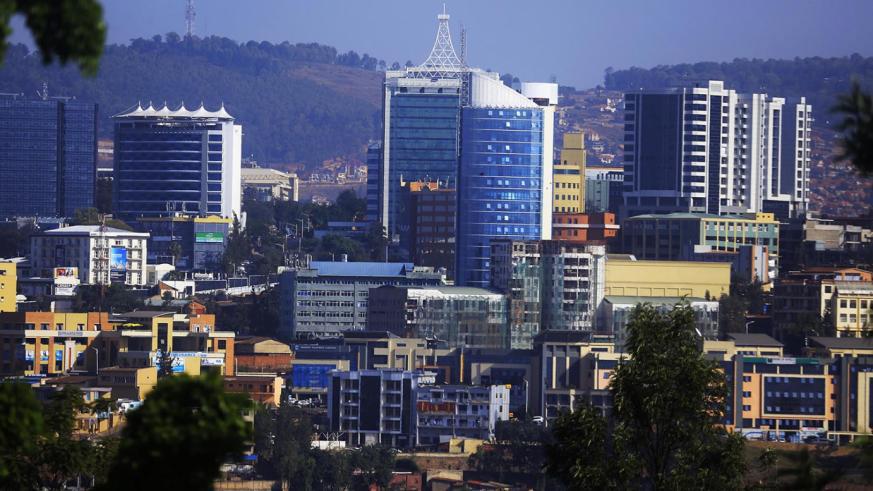
The other key sector to tourism in Rwanda is the international conferences or MICEs as they are known. Rwanda has managed to tap into the MICE sector, Kigali becoming a top destination for international conferences in recent years. Kigali is known as the safest city in Africa and the stability of the country has made Kigali an attractive destination to conference organizers. In addition, the sector has also grown because visitors can get a visa upon arrival which makes it easy for conference attendees to come into the country. The growth has also been supported by heavy infrastructure investment in the form of state of the art international conference venues and transport such as the Kigali Convention Centre ($300 million). Since its unveiling in 2016, the Kigali Convention Centre has been the venue for many international and regional meetings including the African Continental Free Trade Area Forum in 2019.
The economic impact of tourism
In 2019, tourism contributed approximately 13 per cent of GDP which is higher than the world average from only 4.7 per cent in 2000. Before the pandemic, the sector grew at an average annual rate of 7.02 per cent. As a contributor to the economy, tourism quickly overtook coffee and tea production as the biggest foreign currency. In 2019 the total revenue generated from tourism was USD 498 million.

Given the importance of tourism to the economy, the hospitality sector has become a very important sector in the country and in 2019, directly employed over 164,000 people which amounted to 4 per cent of the labour force. In 2019, this sector contributed to 90 per cent of all new jobs created, making it the biggest source of all new jobs. To develop a world-class hospitality sector, an emphasis has been put on training the requisite skills through various institutions in the county. The biggest skills gap in the industry according to the RDB are digital literacy and additional training in the English language to be able to support foreign tourists.
The impact of tourism extends outside of the hospital sector to various local businesses. Businesses within the value chain have also benefited from the growth of tourism and. According to the RBD, the tourism value chain includes accommodation, food and beverage, transportation, retail and cultural services.
Impact of Covid and recovery
Due to the COVID-19 global crisis, Rwanda’s tourism has faced many challenges as a direct impact of the contraction of the global tourism industry. Like many African countries, Rwanda was hard hit by the pandemic lockdowns which necessitated the closure of the economy as a trade-off for public health and the safety of citizens. Rwanda’s overall economy contracted by 0.4 per cent. For most of 2020, tourism activities were limited which meant that the industry was one of the hardest-hit sectors. In the first few weeks of the pandemic when global travel seized, the number of visitors dropped by over half. Employment in the hospitality sector in April and May 2020 declined by 77 per cent and 57 per cent respectively.
In 2020-2021 the country slowly started to open up and implement some strategies for bouncing back including a bigger focus on domestic tourism. However, 2021 was characterised by more Covid-19 restrictions for the first half of the year which extended the recession period. The government has put place an Economic Recovery Fund was put in place, and businesses in the tourism and hospitality sector are eligible given that that they were heavily hit by the COVID-19 pandemic.
Rebuilding the tourism sector has been a key priority in Rwanda’s post-covid economic recovery strategy. It’s still to be seen as the world stabilizes if travel will fully return to previous levels. Despite the uncertainty, experts have a positive outlook for the Rwandan tourism sector in 2022 and beyond the Rwandan tourism sector will see a return to growth of between 7 per cent and 8 per cent.
